
A-Z P

Pacing

An energy management technique that balances rest and activities in daily life to manage symptoms such as fatigue and chronic pain. The aim is to avoid post-exertion malaise (PEM) and a ‘boom and bust’ cycle of overdoing on one day and then being unable to do anything on the next. It means planning tasks, ensuring there are rest and/or recharge activities in between draining ones, being realistic about needs, and allowing oneself to rest when necessary. These are captured within the 4 Ps Principle: Plan, Prioritise, Pace, Permission.
Psychosis

Seeing or hearing things that are not there and/or believing things that are not true.

Prosopagnosia

Face blindness, or finding it difficult to tell apart different faces, even with people who are very familiar. People who experience this use clues (i.e., hair style, glasses, facial hair) to tell people apart, so it can be distressing if any of those clues are changed without warning.

Post Traumatic Stress Disorder

This is mental health condition that can develop after a person experiences or witnesses a traumatic event. A ‘traumatic event’ is any event that a person finds to be trauma-inducing. Symptoms of PTSD include flashbacks, nightmares, feeling very anxious, and difficulty sleeping.

Positive Behavioural Support

A framework that was developed to reduce ‘challenging behaviour’ through reinforcement of neuronormative behaviour.

Polytropism

The concept that Neurotypical brains transition more easily between states of attention but are less able than Autistic brains to focus on a single task deeply and to the exclusion of other thoughts.

Person-First Language

Frames disability as something to be separated from an individual, emphasising that they are a person first and foremost; this approach is intended to promote respect and dignity for individuals by avoiding language that might define them solely by their disability or condition but tends to result in further stigmatising disability.

Perception

How a brain gains and organises information about the world around it; this is affected by a person’s senses, cognition, and observations. Humans use this information to create a meaningful and coherent view of the world.

Penguin Pebbling

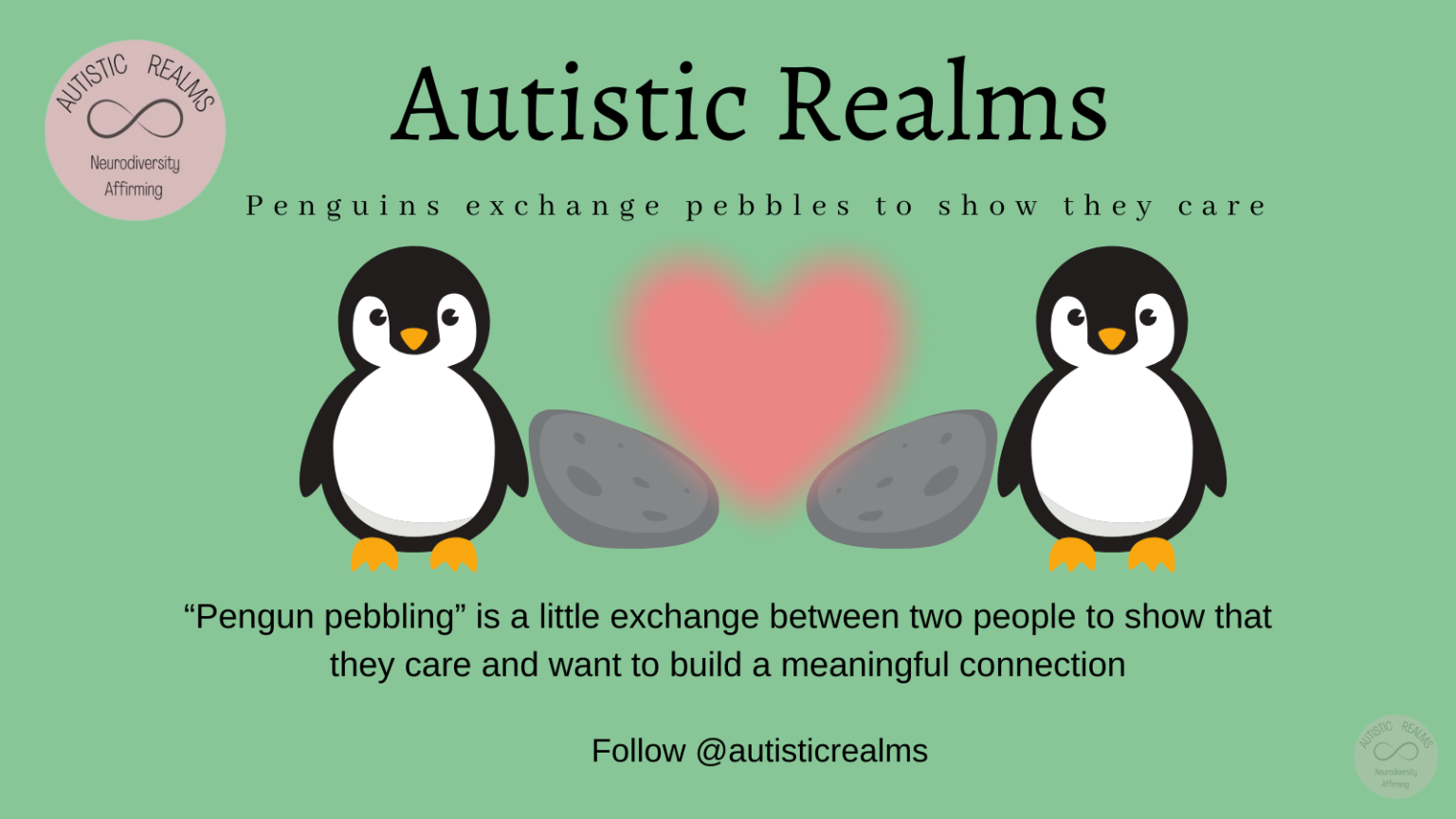
Metaphor for sharing things perceived to be of value to another in order to show affection and strengthen connection; this is based on the way penguins gift pebbles to each other to show affection. Pebbling is a small, tangible act of care that is offered to another solely because it’s a nice thing to do.

PECS

Colloquially used to mean any system of communication that uses pictures. However, that is an inaccurate and inappropriate use of the name ‘PECS,’ which is a specific communication tool designed in support of ABA principles, i.e., to force non-speaking autistic children to comply with the demand to ‘communicate’ by exchanging pictures to get what they want and/or need. The pictures available are only those which the authority figures around the non-speaker determine to be necessary/valid.

Pathologise

To treat a neurodevelopmental difference as being problematically abnormal and/or to characterise that difference as a disease or something that needs to be fixed.

Pathological Demand Avoidance (PDA)

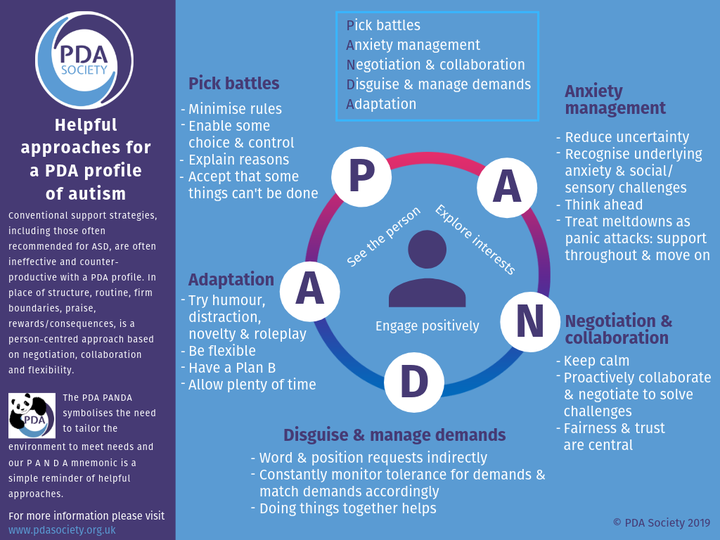
Sometimes conceptualised as an autism subtype, the core identifying trait of PDA is high anxiety driven by threats (simply perceived or overtly expressed) to an individual’s autonomy, which threatened their sense of safety. What is characterised as ‘avoidant behaviour’ are, in reality, actions taken (subconsciously) to retain autonomy and restore their sense of safety. The PDA community rejects the pathological framing; they prefer more affirming terms that remove judgemental overtones, such as Pervasive Drive for Autonomy (PDA) or Rational Demand Avoidance (RDA). A less affirming term, but not as negative as Pathological Demand Avoidance, is Demand Avoidance Phenomena (DAP).

Parallel Play

When people do separate activities with each other, not trying to influence each others’ behaviour; sometimes described as being alone together in the most positive, restorative way.