What is Neurodivergence?
Neuro-affirming understanding

In order to understand neurodivergence, we must first have an understanding of “typical” neurodevelopment.
Here are some important definitions for getting started:
| Term | Definition |
|---|---|
| Neuro | Derived from the Greek word for ‘neuron,’ ‘neuro’ is a prefix used to indicate a relationship to the nerves or the nervous system |
| Neuro development | The development of the brain’s systems and networks, which influences an individual’s information processing; this includes how they learn, read, socialise, remember, and pay attention |
| Neurotype | A person’s unique way of thinking, learning, & communicating, which is determined by the way their brain processes information |
| Neurotypical | Also known as Predominant Neurotype (PNT) or Neuronormative (NN); when a person thinks, processes information, and behaves in ways that are typical or expected within their culture |
| Neurodivergent | When a person’s brain develops and functions in a way that results in them thinking, processing information, and behaving differently to societal expectations. This may be differences in social preferences, ways of learning, ways of communicating and/or ways of perceiving the environment |
| Neurodiversity | A group of people with mixed neurotypes – this INCLUDES neurotypical people |
One very important distinction is that Neurodivergence and Neurodiversity are not the same thing.
With help from the beautiful artwork of neurodivergent speech pathologist NeuroWild, let’s think about it in terms of cupcakes…
Vanilla cupcakes =
NEUROTYPICAL
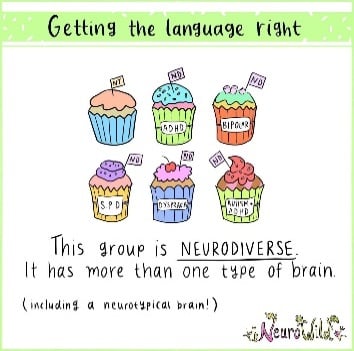
A mix of cupcakes =
NEURODIVERSITY
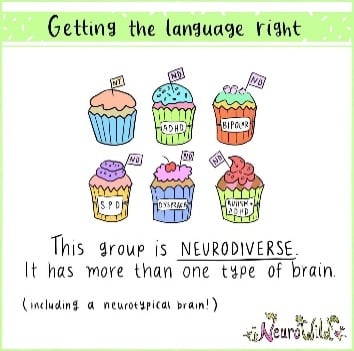
All other cupcakes =
NEURODIVERGENT
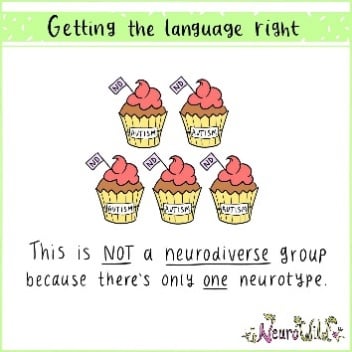
A group of any one type of cupcake =
NOT NEURODIVERSITY
It means that ‘typical’ neurodevelopment is when a brain develops and functions in ways that are the norm in a culture. It isn’t a better way, or the right way – it is just the way that is representative of average brain development.
In this framework, neurodivergence is when a brain develops and functions in a way that is different to the norm in a culture. It isn’t a worse way or a wrong way – it is a different way.
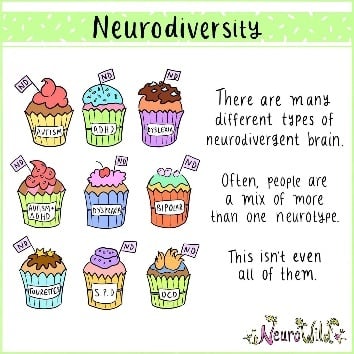
This graphic shows some of the ways that a brain can be neurodivergent.
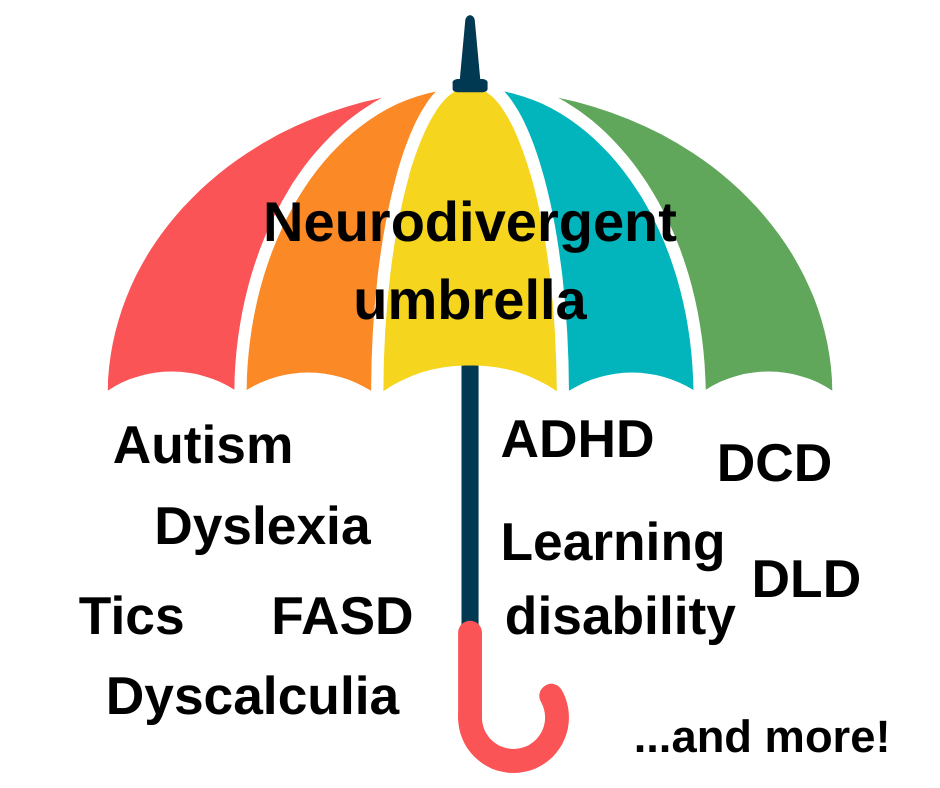
The majority of neurodivergent people are multiply neurodivergent, which means they experience more than one neurodivergence.
Learning about neurodivergence is important, not just because it can help you understand yourself or the young people you work with, but because it can help you understand people all around you in the community. The information here is useful in every environment and context.