Love languages, Neurodivergent
These are the ways neurodivergent people naturally express affection and connection toward each other; they include Info-dumping, Support Swapping, Deep Pressure, Parallel Play, and Penguin Pebbling.

These are the ways neurodivergent people naturally express affection and connection toward each other; they include Info-dumping, Support Swapping, Deep Pressure, Parallel Play, and Penguin Pebbling.
Not a deficit; literalism is the product of monotropic f
This is typically defined as a state of involuntary obsession with another person, based on the pathological framing of the term creator (psychologist Dorothy Tennov) of it being characterised by repetitive, intrusive, and distressing thoughts as well as heightened emotional reactions. It is a cognitive, physical, and emotional experience.
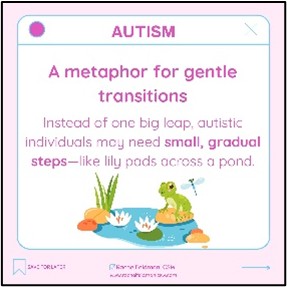
Practical strategy founded in consent, pacing, and attunement to aid transitions between activities/events for neurodivergent people/monotropic thinkers; summarised as offering subtle nudges rather than sudden shocks. This concept was first described by Tanya Adkin and developed with David Gray-Hamond.
Known as Intellectual Disability in some cases, LD is an umbrella term for a number of disabilities which impact on someone’s ability to learn and interact with the world very much based on their IQ (it must be less than 70) and the world’s perception of what is the ‘right way’ to learn and exist.
A learning difficulty is a specific challenge in a particular area of learning (ex., reading or math) without affecting overall intelligence or cognitive functioning in other aspects of life. Sometimes also referred to as a Specific Learning Disability (SLD). It includes dyslexia, dyscalculia, DCD (previously called dyspraxia), and challenges related to neurodivergent learning differences.
When language development occurs at a slower rate than expected.